A roofer who says they spotted loose tiles from the street should not rush you into a repair. Doorstep claims about roof damage are among the roofing scams to avoid in Cork. Ask for clear photos and an explanation of what has failed before discussing payment. Get the proposed work in writing and take time to consider it.
It’s understandable to feel concerned when someone points out a possible leak or storm damage, especially if you can’t see the roof yourself. Check the business name with the Companies Registration Office, ask for a physical address and proof of specialist roofing insurance, and seek a second opinion before agreeing to permanent work. This guide explains how to assess a roofer, compare written quotes, handle deposits and payments, and follow up if work falls short. Clear records and local accountability matter when a roofing problem needs to be put right.
Key Takeaways
- Check a roofer’s business details and ask for clear evidence of any damage before agreeing to work.
- Use a written quote to understand the work, materials and other items included, then compare the full scope rather than price alone.
- Agree payment stages in writing and be cautious about large upfront cash deposits, especially for a small repair.
- Keep records of the work and any follow-up discussions so you can take practical next steps if repairs fall short.
1. How do I check whether a roofing or guttering company is legitimate?
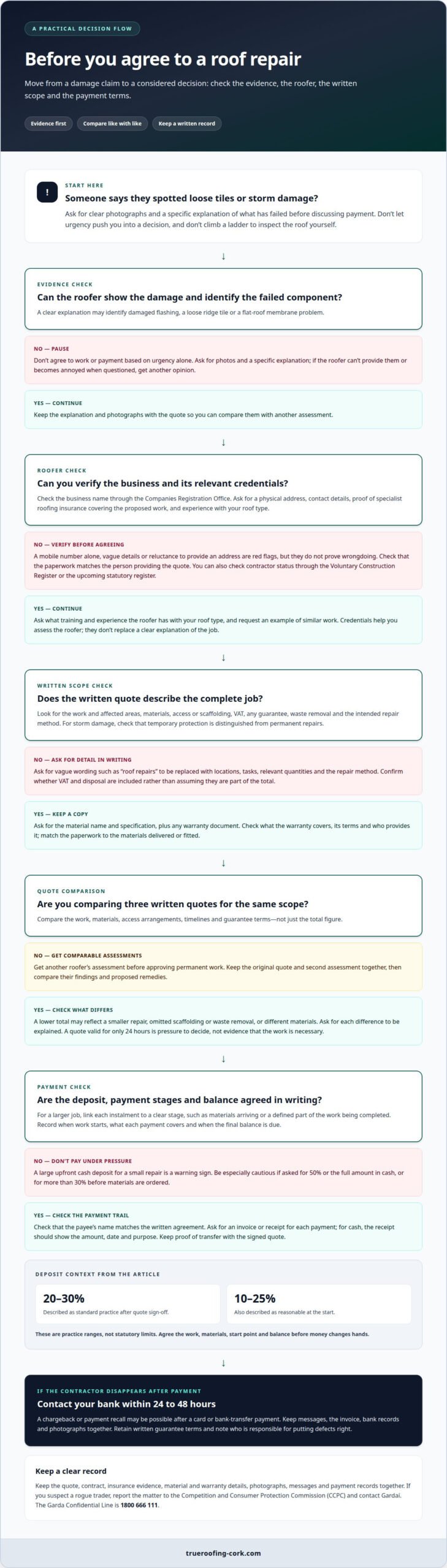
Start with the roofer’s business name, physical address and contact details. Search the company or business name through the Companies Registration Office, then check that the details on the paperwork match the person providing the quote. A local address gives you a clear point of contact if questions arise later. A mobile number alone, vague contact details or reluctance to provide an address are red flags, but they don’t prove wrongdoing.
Ask for a written contract and proof of specialist roofing insurance before work begins. Check that the insurance covers the proposed work and ask what liability it includes. You can also check the contractor’s status through the Voluntary Construction Register or the upcoming statutory register. These checks help you assess credentials, but they don’t replace a clear explanation of the work.
Ask what training and experience the roofer has with your roof type, such as slate, tiles or a flat-roof membrane. Request an example of similar work and ask which component has failed. A clear explanation might identify damaged flashing or a loose ridge tile, rather than relying on urgency alone. Don’t climb a ladder or let a caller pressure you into inspecting damage yourself.
To check materials and warranties, ask for the material’s name and specification in writing, along with the warranty document. Check what it covers, the terms and who provides it. Match the paperwork to the materials delivered or fitted, and keep copies with the quote and invoice.
If you suspect a rogue trader, report the matter to the Competition and Consumer Protection Commission (CCPC) and contact Gardaí. The Garda Confidential Line is 1800 666 111. Keep messages, quotes, payment records and photographs together so you can explain what was promised and what happened.
One of the roofing scams to avoid in Cork is a caller claiming to have spotted loose tiles from the street. Ask for photographs and a specific description of the damage before discussing payment. If they become annoyed when questioned or can’t explain what has failed, pause and get another opinion.
2. Can I get a second opinion on work I have already been quoted for?
Yes. Get another roofer’s assessment before approving permanent work. Warning signs in Cork include door-knockers claiming they spotted loose tiles from the street, pressure to act over alleged storm damage, and calls for a full replacement without clear evidence. Ask what has failed and why a repair would not address it.
Request a written quote that describes the complete job, not just a total figure. It should state the work, materials, access or scaffolding, VAT, any guarantee and waste removal. Ask the roofer to identify the damaged component, such as flashing, a ridge tile or a flat-roof membrane. For storm damage, the quote should distinguish temporary protection from permanent repairs.
Compare three written quotes for the same scope of work. Check whether each includes comparable materials, access arrangements, timelines and guarantee terms. A lower total may reflect a smaller repair, omitted scaffolding or waste removal, or different materials. Ask for each difference to be explained before comparing figures. A clear quote shows what is included and what falls outside the agreed work.
Look closely for vague wording such as “roof repairs” without locations or tasks. Ask for affected areas, quantities where relevant, and the intended repair method to appear in writing. Check whether VAT and disposal are included, rather than assuming they sit inside the total. If a contractor says the quote is valid for only 24 hours, treat that deadline as pressure to decide, not evidence that the work is necessary.
Keep the original quote and the second assessment together, then compare their findings and proposed remedies. If your concern is a flat-roof proposal, review the stated repair area and membrane work alongside the details of flat roofing work.
3. Deposits, staged payments, and disappearing contractors
Agree the deposit only after you have a written quote and payment terms. In Ireland, a deposit of 20–30% after quote sign-off is described as standard practice; 10 to 25 per cent at the start is also described as reasonable. These are practice ranges, not statutory limits. The work, materials, start point and balance should all be clear before money changes hands.
A large upfront cash deposit for a small repair is a warning sign. Be especially cautious if a roofer demands 50% or the full amount in cash, then promises to return later. A request for more than 30% before materials are ordered also calls for careful scrutiny. Don’t pay under pressure to secure a replacement or supposed emergency materials.
For a larger job, agree staged payments in writing. Link each instalment to a clear stage, such as materials arriving or a defined part of the work being completed. Record when work starts, what each payment covers and when the final balance is due. Ask for an invoice or receipt for each payment, and keep it with the signed quote.
Before paying, check that the payee’s name matches the written agreement and retain proof of transfer. If cash is requested, ask for a receipt showing the amount, date and purpose. A contractor who says they are fully insured should provide current insurance evidence, but insurance alone doesn’t protect a deposit or prove the work will be completed.
Some rogue roofers take money for emergency materials and leave without doing the work. If a contractor disappears after a card or bank-transfer payment, contact your bank within 24 to 48 hours; a chargeback or payment recall may be possible. Keep messages, the invoice, bank records and photographs together. For a promised guarantee, retain the written terms and identify who is responsible for putting defects right.
4. Local accountability and follow-up repairs
Local accountability starts with a clear record of who inspected the roof, what they noticed and what they agreed to repair. Keep the written scope, invoice, payment proof and messages together. If water appears again, photograph the affected ceiling, attic area or gutter, then note when you noticed it. These details help distinguish a failed repair from new storm damage.
Ask the original contractor in writing to inspect the fault and explain the next step. Refer to the agreed work, identify the affected area and attach dated photographs. Set out a practical time for a response, and keep a copy of every message. If the contractor returns, record the inspection findings and any repair work completed. Document the problem before making further changes, unless immediate action is needed to protect the property.
Compare the original quote with the completed work and the problem now visible. For example, if the quote named ridge tiles but water appears beside a roof valley, ask how the repair addressed the source of the leak. A second inspection can help clarify whether the original fault remains or another component is involved. Keep any new assessment separate from the first contractor’s paperwork.
Irish consumer protections depend on how the agreement was made. A 14-day cooling-off period may apply to contracts agreed at your home, unless you explicitly requested urgent repairs to begin during that period. For a faulty repair, keep evidence and raise the issue directly in writing before escalating it.
If the contractor won’t respond, or you suspect a rogue trader, report the matter to the Competition and Consumer Protection Commission. Contact Gardaí about suspected fraud. Keep your records ready so you can describe what was promised, paid for and completed. Clear red flags include a contractor who cannot be traced or refuses to discuss a documented fault.
If a roof repair needs attention, you can arrange roof repairs and explain what has happened since the previous work.
True Roofing Cork: New Roof Installations
True Roofing Cork can help with a practical roof repair, a replacement or an assessment of the roof’s condition. Services include new roof installations, roof repairs, flat roofing and guttering, covering different roofing and rainwater system needs.
If an inspection points to widespread deterioration rather than an isolated fault, discuss whether a new roof installation is suitable. For a local leak or damaged section, a roof repair may be more relevant. Flat roofing and guttering services address those specific parts of the roof system. A clear description of the issue helps focus the discussion on the work needed.
Keep your notes, photographs and previous quote nearby when explaining the problem. That record can help set out what you have noticed and what needs attention. Contact True Roofing Cork to discuss your roofing needs.
Make your next roofing decision with confidence
A roofing decision can affect how well your home stands up to the weather, so give yourself time to make it carefully. The lesson behind roofing scams to avoid in Cork is simple: let clear evidence and a written agreement guide your decision, not pressure at the door. Keep a dedicated record of roof work, including the agreed scope, materials, invoices and photographs. That file can help you understand what has changed if a leak appears or another repair is needed later.
Choose the service that matches the identified condition, whether that means a targeted repair or a wider project. True Roofing Cork offers new roof installations, roof repairs, flat roofing and guttering services. Describe the issue to discuss the work that may be suitable for your home.
Contact True Roofing Cork to discuss your roofing needs. Taking a measured approach puts you in a stronger position to protect your home and move ahead with confidence.
Frequently Asked Questions
Are doorstep roofing scams common in Munster?
Doorstep approaches are a recognised risk in Cork and elsewhere in Munster. Cold-callers may claim they’ve spotted loose tiles from the street, then offer immediate repairs. Treat an unsolicited visit as a reason to slow down, not to agree. Be particularly cautious if someone targets a person living alone, points to damage you can’t see, or insists there’s no time to get another opinion.
Are you VAT registered and will you provide a proper tax invoice upon completion?
Have the contractor’s VAT status and invoice arrangements stated in writing before work starts. When the job is complete, check that the invoice names the same business as your agreement, describes the work completed and records the payment made. Keep it with the quote and any payment receipt. This paper trail helps you query an invoice that differs from the work or terms you authorised.
Can I get a second opinion on work I have already been quoted for?
Yes. A second opinion can help distinguish a local defect from a recommendation for wider replacement. Ask another roofer to assess the roof independently and explain the fault and proposed remedy before showing them the first quote. Then compare whether both assessments identify the same problem. This is useful when one recommendation involves replacing a large area rather than addressing a specific defect.
Do I have a cooling-off period if I agree at the door?
A 14-day cooling-off period may apply to a contract agreed at your home, unless you explicitly request urgent repairs to begin during that period. Keep a copy of the agreement and note whether you asked for work to start early. If you’re unsure how the period applies to your situation, contact the Competition and Consumer Protection Commission for consumer guidance.
Do you have Public and Employers Liability insurance specifically for roofing?
Ask the roofer for current insurance evidence covering the proposed roofing work, and check that the insured name matches the business on your quote. Public Liability and Employers’ Liability are separate types of cover, so evidence of one doesn’t prove the other. Check that the policy details relate to roofing rather than relying on a general statement that the contractor is insured.
How can I compare two quotes fairly?
Put both quotes beside the same list of roof areas and requested outcomes. Check whether each proposes a repair or replacement, and note differences in materials, access arrangements, waste removal, VAT and exclusions. A lower total may cover less work. If the recommendations differ, compare the stated fault and remedy first, then ask each roofer to explain any difference in scope.