A small leak doesn’t automatically mean you need a new roof. A few damaged slates may call for a focused repair, while recurring leaks or widespread wear can point to a larger problem. The decision between roof repair or full replacement should be based on what an inspection finds, not just on the most visible damage.
It’s understandable to worry about paying for work your roof may not need, or choosing a quick fix that won’t last. Compare the roof’s overall condition with the proposed repair scope and your plans for the property. A clear assessment can show whether a localised repair is proportionate or whether replacement is the more practical option.
This guide explains which signs may support repair or replacement, what a roofer should check, and what to ask before agreeing to work. You’ll also learn how to compare the proposed scopes, so you can make a considered decision with confidence.
Key Takeaways
- A leak or damaged tile doesn’t automatically mean the whole roof needs replacing; the condition of the surrounding roof matters too.
- Use an inspection to distinguish an isolated fault from recurring or widespread problems before choosing roof repair or full replacement.
- Compare written quotes by checking the proposed work, materials, access needs and exclusions, not just the headline amount.
- Record the symptoms, ask what the inspection found and make sure the agreed scope is clear before work begins.
- True Roofing Cork provides residential roof repairs and new roof installations in Cork and surrounding areas.
Roof repair or full replacement: what is the decision really about?
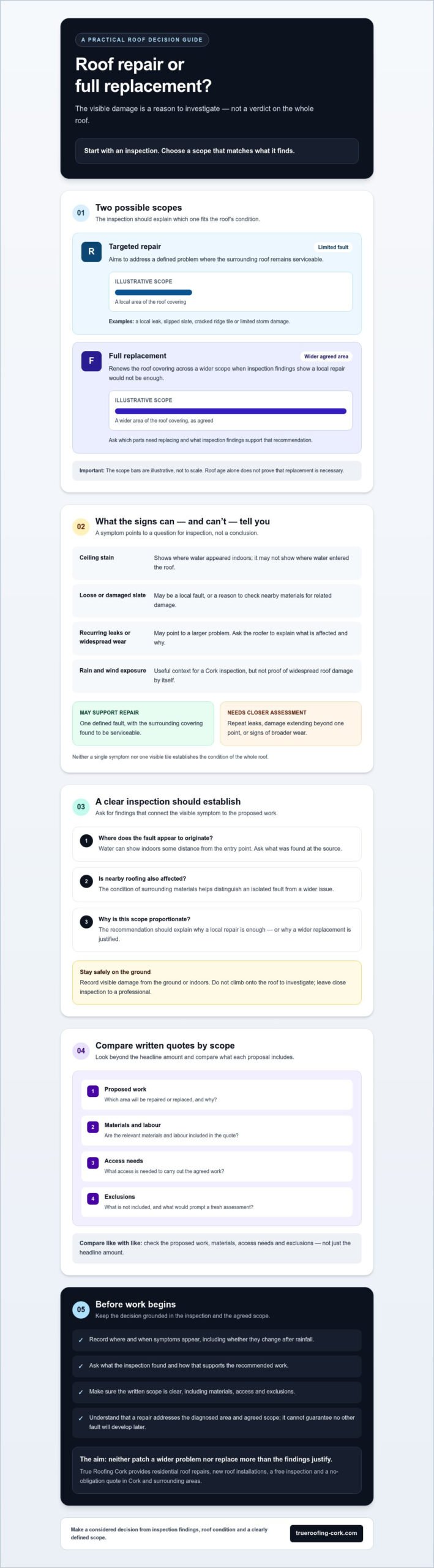
A leak or damaged tile doesn’t automatically mean the whole roof needs replacing. The visible fault is a reason to investigate, not a verdict on the roof. A repair targets a limited problem; a replacement renews the roof covering across a wider agreed area. Choosing between roof repair or full replacement means checking the materials around the damage as well as the symptom itself.
A roof protects the home from the elements, and its materials and construction affect how it performs. This overview of the essential functions of a roof provides useful background, but it can’t determine what work your own roof needs. That depends on inspection findings, not one visible symptom or a single rule about age.
At a glance
- Repair: Targeted work on a limited fault. The evidence should show that the problem is local and the surrounding roof remains serviceable. The aim is to address the cause without extending the work unnecessarily.
- Replacement: Renewal of the roof covering across a wider area. The inspection should explain why that scope is appropriate and why a local repair would not be enough.
What a roof repair can address
A repair may be appropriate for a local leak, a slipped slate, a cracked ridge tile or limited storm damage. However, the place where water appears indoors may not be where it enters the roof. A roofer should investigate the source and check nearby materials for related damage, rather than treating only the water stain or replacing only the most obvious tile.
If the fault is isolated and the surrounding covering remains sound, targeted work may be enough. If inspection finds damage extending beyond that point, the repair scope may need to widen. Ask what was found and why the proposed work covers that area.
What a full roof replacement involves
Replacement renews the roof covering across the agreed scope. Ask which parts of the roof need replacing and what inspection findings support that recommendation. Age can provide context, but it doesn’t prove by itself that replacement is necessary.
A clear explanation helps you judge whether the proposed work matches the roof’s condition. The aim is neither to patch a wider problem nor to replace more than the findings justify. It’s to choose a proportionate solution that addresses the issue properly.
When is roof repair a sensible option for a Cork home?
A repair may be sensible when an inspection finds one defined fault and the surrounding roof remains serviceable. A slipped slate or cracked ridge tile can be local damage, but the visible problem alone can’t show whether nearby areas are affected. Decide between roof repair or full replacement based on what the inspection establishes across the relevant part of the roof.
In Cork, rain and wind exposure are useful context for an inspection, but they don’t prove that a roof has widespread damage. The roofer should assess the covering and investigate how water may be getting in. A ceiling stain shows where water has appeared indoors, not necessarily where it entered the roof. A loose slate may be the fault itself or a reason to check the surrounding area.
Signs the damage may be limited
A single damaged slate, one local leak or a small area affected by a storm may point to a targeted repair if the rest of the roof checks out. None of these signs establishes the condition of the whole roof on its own. For general reference, the Insurance Institute for Business & Home Safety outlines signs it’s time for a new roof, including issues that merit closer attention. A roofer can assess whether those signs apply to your home.
Keep a simple record of what you notice: where a stain appears, when it shows up and whether it changes after rainfall. Note visible damage from the ground or indoors. Don’t climb onto the roof to investigate; leave close inspection to a professional.
Questions to ask before agreeing to a repair
A clear explanation helps you understand what the proposed repair will address. Before agreeing, ask:
- What did the inspection find, and where does the fault appear to originate?
- Which area will the work cover, and are related materials and labour included in the quote?
- If another leak or damaged area appears, what signs should prompt a fresh assessment?
A repair addresses the diagnosed area and agreed scope. It isn’t a guarantee that no other fault will develop later. If inspection finds related damage nearby, ask how that changes the proposed work. True Roofing Cork offers a free inspection and no-obligation quote for homeowners in Cork and surrounding areas. You can discuss a roof repair inspection before deciding on the next step.
When does full roof replacement make more sense than repeated repairs?
Full replacement may be worth considering when an inspection finds problems across several parts of the roof, or faults that keep returning in different areas. That doesn’t make replacement automatic. The recommendation should match the evidence and explain why work across a wider area is more appropriate than another targeted repair.
Repeated repairs are a reason to review the roof as a whole, not proof that it needs replacing. A leak that returns could mean the original fault wasn’t fully resolved, a separate issue has developed, or the affected area is broader than first thought. Ask the roofer to distinguish between these possibilities and show how the findings support the proposed scope.
Evidence that may point to wider roof problems
An inspection may identify multiple damaged areas, recurring water ingress or visible deterioration across different sections. These findings can suggest that the problem extends beyond one isolated fault, but they need to be assessed in context. A photograph or indoor water stain can help describe what you’ve noticed; neither can establish the full condition of the roof on its own.
Some parts of a roof are concealed by the covering, so a professional may need to assess them before reaching a conclusion. Ask what could be inspected, what remains uncertain and whether further checks are needed to define the work. A clear explanation should connect each finding to the area included in the replacement proposal, rather than relying on a general claim that the roof is worn.
Why repeated patching deserves a fresh assessment
Keep previous inspection notes, quotes or records of completed repairs. Comparing them with current findings can show whether the same area is failing again, new faults have appeared elsewhere, or the original repair addressed a limited issue as intended. This gives you a firmer basis for deciding between roof repair or full replacement.
Ask the roofer to compare another repair with the wider replacement scope: which faults would each option address, and what evidence makes one more suitable? Replacement should not be presented as certain to cost less over time or prevent every future roofing issue. Its purpose is to renew the covering across the agreed area when inspection findings support that work. Material choice and expected roof lifespan are separate considerations; if dedicated guidance is available, use it to assess those questions alongside the inspection.
How to compare repair and replacement quotes objectively
A repair quote and a replacement quote may cover very different work, so the headline amount alone won’t tell you which is the better fit. Compare what each roofer inspected, the problem identified and the work proposed. Ask why that scope suits the roof’s observed condition. This makes it easier to judge roof repair or full replacement on a like-for-like basis rather than comparing unlike proposals.
| What to compare | Repair proposal | Replacement proposal |
|---|---|---|
| Proposed scope | Which area will be repaired, and what work is included? | How much of the roof covering will be renewed? |
| Diagnosed issue | What fault is the repair intended to address? | What findings support replacing this wider area? |
| Materials | Which materials are included for the agreed repair? | Which materials are specified for the new covering? |
| Access needs | What access arrangements are included or required? | What access arrangements are included or required? |
| Exclusions | What work or associated items are not included? | What work or associated items are not included? |
Check what the quote actually covers
Look for a written description of the work areas, labour, materials and any stated exclusions. If a quote mentions access arrangements without explaining what’s included, ask for clarification. The same applies to waste handling or other associated items: don’t assume they’re covered unless the quote says so.
Before work begins, make sure the project scope and price are agreed. Ask how the roofer will explain and seek approval for additional work if further issues come to light during the job. This gives you the chance to consider a revised scope before proceeding.
Use inspection findings to compare proposals
Ask for a plain-language account of what the inspection found and why the recommended work follows from it. Photographs or written notes, where available, can help you understand the areas being discussed. Confirm that the roofer serves your part of Cork and can inspect your property. A clear proposal should connect the evidence to the work, whether it recommends a limited repair or wider replacement.
True Roofing Cork serves Cork and surrounding areas, with a free, no-obligation inspection and an upfront quote. To review your roof’s condition and proposed scope, arrange a free roof inspection.
Choose the right roof solution and agree clear next steps
Once you have a professional assessment, use a simple process to move from concern to a clear decision. You don’t need to settle on roof repair or full replacement before the inspection. Gather useful details, understand the findings and confirm exactly what the proposed work includes.
- Document the symptoms: Note where and when you see signs of a problem.
- Arrange an inspection: Ask a roofer to assess the roof and explain what they find.
- Compare written scopes: Check that each proposal responds to the inspection findings.
- Confirm the agreement: Make sure the work, materials and price are clear before approving the job.
What to prepare before a roof inspection
Write down which rooms are affected, when a leak appears and whether the same issue has returned. These details can help the roofer understand the pattern, but they don’t establish the source on their own. Keep records of previous repairs or other quotes ready to share.
Photographs can also help, provided you take them safely from the ground or indoors. Don’t climb onto the roof or attempt work at height to collect evidence. Leave access and close inspection to the professional.
Agreeing the work before it starts
Ask whether the recommendation is a repair or replacement, which findings support it and what areas the work will cover. Check that the written proposal clearly sets out the materials and labour included, along with any exclusions. If something is unclear, ask for an explanation before giving approval.
True Roofing Cork provides residential roof repairs and new roof installations in Cork and surrounding areas. The company offers a free inspection and a no-obligation quote, with the project scope and price agreed before work begins. This gives you an opportunity to understand the proposed work and decide whether it suits your needs.
If you’re ready to discuss your roof’s condition and a proportionate next step, arrange a free, no-obligation roof inspection with True Roofing Cork.
Make your next step with confidence
The right choice between roof repair or full replacement depends on the roof’s condition, not the most visible fault alone. A focused repair may suit an isolated issue when the surrounding covering remains serviceable. If inspection finds recurring or widespread problems, a broader project may be justified, provided the proposed scope is supported by those findings.
Before agreeing to work, compare written proposals, ask how the inspection findings support the recommendation and confirm the scope and price upfront. These steps help you choose a proportionate solution without feeling rushed into more work than the roof needs.
True Roofing Cork has more than 25 years of trading experience and provides residential roof repairs and new roof installations in Cork and surrounding areas. Its free inspection and no-obligation quote give you the opportunity to understand the roof’s condition and discuss suitable work. The project scope and price are agreed before work begins.
For a clear assessment and a conversation about your options, arrange a free, no-obligation roof inspection. With the right information, you can take the next step with confidence.
Frequently Asked Questions
How do I know whether my roof needs repair or full replacement?
An inspection can help establish whether the fault is isolated or part of a wider pattern. A roofer should check the damaged area, nearby roof covering and signs of recurring water ingress, then explain how the findings support the proposed work. For a Cork home, ask for a written scope and compare the evidence behind each recommendation before deciding between roof repair or full replacement.
Can one leaking area mean the whole roof needs replacing?
One leak doesn’t automatically mean the whole roof needs replacing. Water may enter at a different point from where a stain appears indoors, so the source needs to be investigated. If inspection finds a local fault and the surrounding covering remains serviceable, a targeted repair may be suitable. If there are related faults across wider areas, ask what was found and why broader work is proposed.
Is it better to keep repairing an old roof or replace it?
Age alone doesn’t decide whether repair or replacement is right. The roof’s current condition, the extent of damage and whether faults keep returning all matter. If problems are local and the surrounding covering remains serviceable, a repair may be proportionate. If inspection identifies widespread deterioration, ask why replacing a wider area is appropriate. Compare the scope and findings, rather than relying on age as the only guide.
How many roof repairs are too many before replacement?
There isn’t a fixed number of repairs that automatically means replacement is needed. Repeated faults are a reason to review the roof as a whole and compare current inspection findings with records of previous work. Ask whether the same issue has returned or new problems have appeared elsewhere. A roofer should explain whether another local repair addresses the diagnosed fault or whether the findings support a broader replacement scope.
What should a roofer check before recommending full replacement?
A roofer should assess the roof covering across the proposed work area, note visible damage and recurring leaks, and explain whether problems are isolated or widespread. They should also identify any concealed areas that need further assessment before drawing conclusions. Ask what evidence supports the replacement scope and which parts are included. Photographs or notes, where available, can help you understand how the findings relate to the recommendation.
Should I get more than one quote for roof repair or replacement?
Comparing written quotes can help you understand the proposed work, especially if one recommends a repair and another suggests replacement. Check each quote against the inspection findings, materials, labour, access arrangements and exclusions. Ask each roofer why their recommendation fits the roof’s condition. For a Cork home, confirm the roofer serves your area and can inspect your property. Compare like-for-like scopes, not just headline amounts.
Can a roof inspection confirm whether repair is enough?
An inspection can help determine whether a repair is likely to address the diagnosed problem by assessing the fault and surrounding roof covering. The roofer should explain what they could inspect and flag any concealed areas that remain uncertain. Ask how the proposed repair relates to the findings and what signs would prompt a fresh assessment if another fault appears. The inspection informs the decision, but it can’t guarantee that no other issue will develop later.