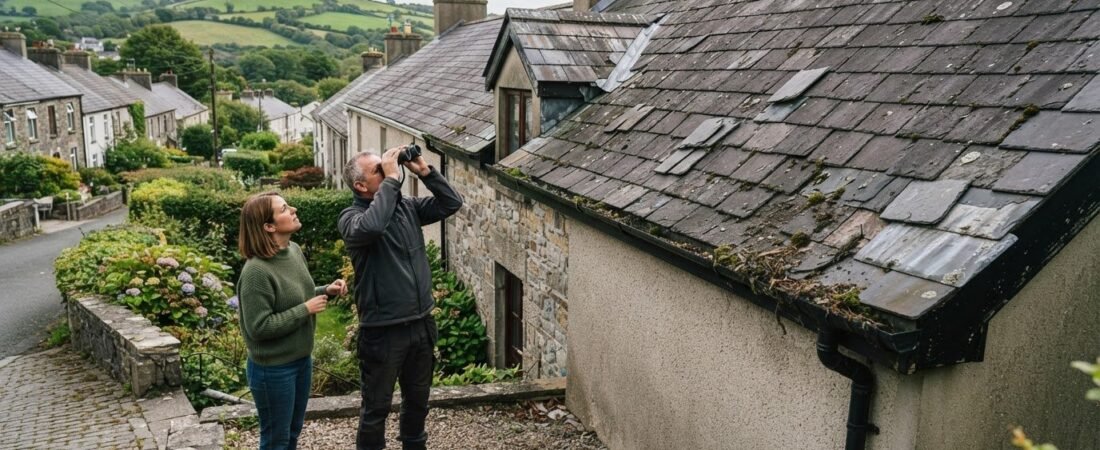
A missing tile doesn’t automatically mean you need a new roof. But recurring leaks or damage in several areas can point to a wider problem, even when the roof looks sound from the garden. If you’re trying to work out how to tell if roof needs replacing, the pattern matters more than one defect.
It’s understandable to worry that a small warning sign could lead to unnecessary work, or that a leak may be causing damage out of sight. You don’t have to climb onto the roof to start checking. Ceiling stains, damp patches in an accessible attic, slipped tiles visible from the ground and roofing debris in the gutters can help build a clearer picture.
This guide explains which signs may suggest replacement rather than repair, what you can safely check inside and outside your home, and what to ask a roofer during an inspection. A local assessment in Cork can help establish whether damage is isolated or widespread, so you can consider the evidence before deciding what work is needed.
Key Takeaways
- One damaged tile or isolated leak doesn’t automatically mean replacement. Look for repeated problems across different areas.
- To understand how to tell if roof needs replacing, compare visible wear with signs of recurring water entry inside the home.
- Check from the ground and indoors only. Note affected rooms, when leaks occur and any previous repair history.
- Use a checklist to organise what you’ve noticed, not to diagnose the roof or decide on replacement yourself.
- Ask a roofer to explain the defects found and why repair or replacement may be suitable before deciding on next steps.
How to tell if your roof needs replacing: start with these warning signs
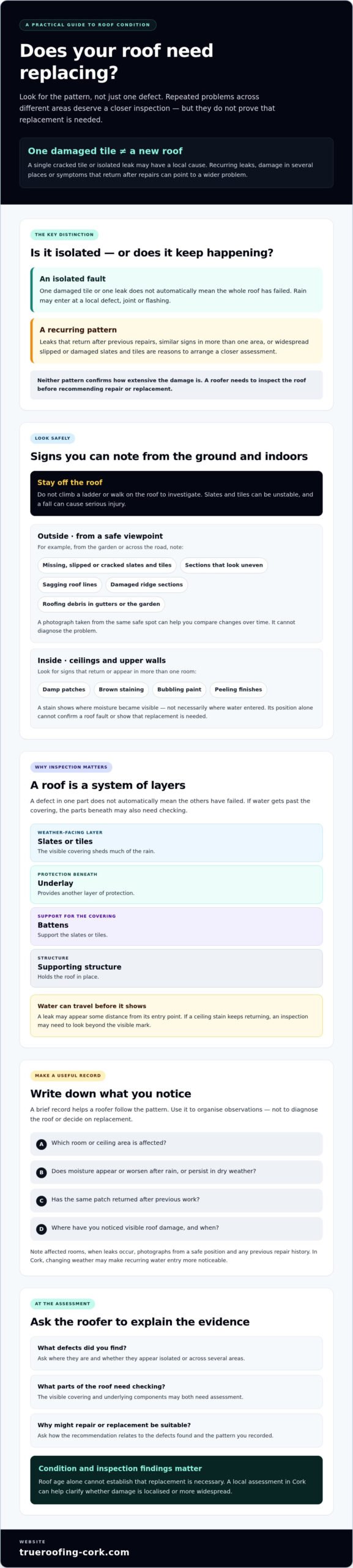
A single cracked tile or isolated leak doesn’t automatically mean the whole roof needs replacing. The more useful question is whether defects keep appearing, affect several areas or return after repairs. If you’re asking how to tell if roof needs replacing, use the signs below to organise what you can see, not to diagnose the roof from a distance.
A roof’s covering and the parts beneath it work together to keep the weather out. This roof overview gives a general introduction to roof functions and materials. For your own home, repeated leaks, widespread damage to the covering or visible deterioration over time are reasons to arrange an on-site assessment. Don’t climb a ladder or walk on the roof to investigate. Slates and tiles can be unstable, and a fall can cause serious injury.
What can you spot from the ground?
Choose a safe position with a clear view, such as the garden or across the road. Look for missing, slipped or cracked slates and tiles, and sections that appear uneven compared with the rest of the roof. Note any sagging roof lines, damaged ridge sections, or pieces of roofing material in the garden or gutters after bad weather. A photograph from the same safe spot can help you compare changes over time. It won’t diagnose the problem, so record what you notice and when.
Which indoor signs deserve attention?
Look at ceilings and upper walls for damp patches that return, brown staining, bubbling paint or peeling finishes. Check more than one room, especially after rainfall, and note where each mark appears. A stain can have several possible causes, so its location alone won’t confirm a roof fault or show that replacement is needed.
Keep a brief record of the evidence:
- Which room or ceiling area is affected?
- Does moisture appear or worsen after rain, or persist in dry weather?
- Has the same patch returned after previous work?
This record can help a roofer follow the pattern and investigate beyond the visible mark. In Cork, changing weather may make recurring water entry more noticeable, but only an inspection can clarify whether the issue is localised or part of wider roof deterioration.
What recurring roof damage can reveal about the roof beneath
A roof works as a system. Slates or tiles form the visible covering and shed much of the rain. Beneath them, underlay provides another layer of protection, whilst battens support the covering and the supporting structure holds the roof in place. A defect in one part doesn’t automatically mean the others have failed. However, if water gets past the covering, it may be important to check what lies beneath.
A ceiling stain shows where moisture has become visible, not necessarily where it entered. Water can travel along or between parts of the roof before reaching an interior surface. If the stain keeps returning, the finishes may deteriorate and the inspection may need to look beyond the mark itself. The same symptom can have different causes, so a photograph or description can explain what you’ve noticed but can’t confirm the fault.
Widespread roof deterioration means damage or recurring symptoms across multiple areas, rather than one isolated defect. A physical inspection can show whether the problem is limited to the covering or involves underlying components too.
Why one leak does not always mean the whole roof has failed
Rain may enter through a local defect, joint or flashing, then travel before appearing indoors. That can leave a stain some distance from the entry point. A single leak may therefore have a local cause, whilst recurring leaks in several places call for a closer look. Neither pattern proves the extent of the damage. A roofer needs to assess the covering and underlying components before recommending the scope of work.
When repeated symptoms suggest a wider problem
If a leak returns after previous repairs, or similar signs appear in more than one area, record the locations and repair history for the roofer. Widespread slipped or damaged slates and tiles are also worth documenting from a safe position. These patterns may point to broader deterioration, but they don’t confirm it. Roof age alone can’t establish that replacement is necessary. Condition and inspection findings matter. If you’d like to understand how long a roof lasts in Ireland for different roof types, our lifespan guide explains what can shorten or extend it.
When considering how to tell if roof needs replacing, look at the pattern without trying to diagnose the cause. A roofer can explain whether repair or replacement is appropriate after examining the roof. In Cork and surrounding areas, True Roofing Cork offers a free inspection and no-obligation quote to help clarify the next step.
Roof replacement signs or a repairable fault: how to read the evidence
A leak, ceiling stain or damaged tile on its own doesn’t prove that the whole roof needs replacing. It may indicate a local fault, but the same symptom can have different causes. This comparison can help you organise what you’ve noticed and discuss it with a roofer. It’s a conversation aid, not a diagnosis or substitute for an on-site inspection.
| What you notice | What it may suggest | What to ask |
|---|---|---|
| One damaged slate or tile | A possible localised repair, depending on the surrounding roof condition | Is the damage confined to this area? |
| A single leak with a local source identified | A fault that may be limited to one area, though it still needs assessment | Has the source been confirmed, and what else was checked? |
| Leaks returning after previous repairs | A recurring issue that warrants closer investigation | What is causing the leak to return? |
| Damage or deterioration across several areas | A pattern that may justify discussing broader work | Are the defects widespread or confined to particular sections? |
| Visible sagging or extensive covering damage | A reason to arrange a professional assessment promptly | What parts of the roof need attention, and why? |
Signs that may point to a localised repair
One cracked or slipped slate, or a leak with a clearly identified local source, may be consistent with a repairable fault. That isn’t guaranteed: the area around the defect and the rest of the roof still need checking. Before agreeing to work, ask the roofer what they inspected and whether they found related damage.
Signs that may justify discussing full replacement
Deterioration in several areas, recurring problems after repairs, extensive covering damage or a visibly sagging roof line call for a closer professional assessment. They don’t automatically confirm that full replacement is necessary. Ask the roofer to show or describe where defects were found, explain whether they’re widespread or localised, and set out the reasons for the proposed work.
To understand how to tell if roof needs replacing, focus on the evidence and the explanation, rather than making a decision from one symptom. A clear inspection should help you compare repair and replacement as options. If you’re weighing up roof repair or full replacement, our guide explains how to compare the two. If you’re in Cork or the surrounding area, you can ask True Roofing Cork about a roof inspection and no-obligation quote.
What to check safely before arranging a roof assessment
A little preparation can make an inspection more useful. You don’t need to identify the fault yourself. Record what you’ve noticed and where, so the roofer can compare your observations with what they find on site. If you’re researching how to tell if roof needs replacing, this checklist helps you gather evidence without putting yourself at risk.
A safe checklist for homeowners
- Look indoors. Check ceilings and upper walls for dampness, staining or peeling finishes. If you can enter an accessible attic space safely and practically, look for visible daylight, damp patches or staining. Don’t touch roof components or materials that appear unsafe.
- Observe from the ground. From a safe position, note any visible damage or changes to the roof. Don’t use a ladder or walk on the roof to investigate.
- Take photographs. Photograph indoor marks and, from a safe ground-level viewpoint, any visible exterior concerns. Note the date of each image so you can track whether signs change.
- Keep a short record. Note when leaks occur, which rooms are affected, whether moisture appears after rainfall, and any previous roof repairs or recurring issues.
These notes won’t diagnose the cause, but they can help the roofer understand the history and check the areas that concern you.
Questions to ask during a roof inspection
Ask the roofer to explain what they observed, where each defect is located, and whether the issues appear isolated or spread across the roof. If a visible stain doesn’t line up with the likely entry point, ask what they checked to investigate further.
Before deciding on work, ask which repair and replacement options may be suitable and why. Request written findings that separate observed damage from recommended work, and note any uncertainty that needs further investigation. A clear written scope should set out what the proposed work covers, followed by a no-obligation quote. This gives you something specific to review rather than relying on a verbal recommendation alone.
In Cork and surrounding areas, True Roofing Cork offers a free inspection and no-obligation quote. You can arrange a roof inspection to discuss the signs you’ve recorded and whether repair or replacement is worth considering.
What happens after a roof inspection in Cork?
A useful inspection should give you a clearer picture of the roof’s condition, where defects were found and what steps may be appropriate. The findings might support a repair, or give you a reason to discuss replacement. Neither option should be assumed before the roof has been assessed.
In Cork, a roofer can consider the property’s condition alongside the weather exposure and the areas where you’ve noticed problems. Your notes about recurring leaks, affected rooms and previous repairs can help guide the investigation. The assessment should connect those observations to visible findings, rather than rely on a ceiling stain or one damaged tile alone.
What a useful assessment and quote should explain
Ask for a clear description of the condition observed, including where defects are located and whether they appear localised or more widespread. The roofer should explain why they recommend particular work and whether any uncertainty remains. If repair and replacement are both being considered, ask what supports each option.
Before work begins, make sure the proposed scope, materials and project price are agreed and clearly set out in writing. A written quote gives you a chance to check what is included and ask questions before deciding. It should also make clear whether the recommendation addresses a specific fault or wider deterioration.
When to contact a local roofer
Arrange a professional assessment if leaks keep returning, visible covering damage is extensive or the roof line appears to sag. These signs don’t establish that replacement is necessary, but they do warrant a closer look. Avoid climbing up to investigate. Leave roof-level checks to a professional.
If you’re still wondering how to tell if roof needs replacing, an inspection can help separate what’s been observed from what’s being recommended. True Roofing Cork serves Cork and surrounding areas, offering a free inspection and no-obligation quote. Discuss the roof’s condition and possible next steps before deciding whether repair or replacement is right for your property.
Make your next roof decision with confidence
One damaged tile or isolated leak doesn’t automatically mean a new roof is needed. Look for recurring problems or deterioration across several areas, and leave roof-level checks to a professional. Knowing how to tell if roof needs replacing starts with recording what you can safely see, then asking a roofer to explain the findings and the reason for any recommended work.
If leaks return, damage looks widespread or the roof line appears to sag, an assessment can give you a clearer basis for deciding between repair and replacement. True Roofing Cork provides roof repairs and new roof installations across Cork and surrounding areas, with more than 25 years of trading experience. A free inspection and no-obligation quote can help you understand the proposed scope before deciding whether to proceed.
Arrange a free, no-obligation roof inspection with True Roofing Cork to discuss what your roof needs and the possible next steps.
Frequently Asked Questions
How do I know if my roof needs replacing?
Several signs together, such as recurring leaks, widespread damaged or missing slates or tiles, and visible sagging, are reasons to arrange an inspection. They don’t prove replacement is necessary, as different faults can cause similar symptoms. If you’re searching for how to tell if roof needs replacing, note what you can safely see and where it occurs. A roofer can assess the roof covering and relevant underlying components before advising on suitable work.
Can one leak mean my roof needs replacing?
Not necessarily. A leak may come from a local fault, and water can travel before it appears as a mark on a ceiling or wall. One leak is a reason to investigate, not proof that the whole roof has failed. If it returns after repair, or you notice damage in several areas, ask a roofer to check the wider roof and explain whether the problem appears localised or more extensive.
What are the signs of roof damage inside the house?
Recurring damp patches, water staining, peeling finishes and moisture in an accessible attic space can be clues. None identifies a roof fault on its own, as similar marks can have more than one cause. Note which rooms are affected and when the signs appear, particularly after rain. Share these details with the roofer so they can compare the indoor symptoms with what they observe outside.
Is a sagging roof always a sign that it needs replacing?
No. A visible dip or change in the roof line should be taken seriously, but it doesn’t confirm the cause or establish what work is needed. Don’t climb onto the roof or try to investigate structural areas yourself. Arrange a professional assessment and describe what you’ve noticed, including whether the change seems recent or has become more pronounced. The roofer can inspect the roof and explain the findings and next steps.
Can I check my roof myself without climbing on it?
Yes. From a safe position, look for missing or uneven slates and tiles, damaged ridge sections, debris or changes in the roof line. Indoors, note any recurring stains or damp areas. Don’t use a ladder or walk on the roof to inspect it. Photographs taken indoors or from a safe spot on the ground can help you show a roofer what concerns you and whether signs have changed over time.
Does an old roof always need replacing?
No. Age alone can’t confirm a roof’s condition or show whether replacement is necessary. Materials, installation, maintenance and exposure all affect how a roof performs. If you don’t know its history, gather any records you have, such as details of previous repairs. Ask a roofer to inspect the covering and relevant underlying components, then explain what they found before you decide whether repair or replacement is appropriate.
What should I ask a roofer if I think my roof needs replacing?
Ask which defects they found, where they are and whether they appear localised or widespread. Ask which repair and replacement options may be suitable, and why they recommend them. Request written findings and a clear scope of work, including what is covered and the project price. Make sure the scope and price are agreed before work begins. A straightforward explanation helps you weigh the evidence and make a considered decision.