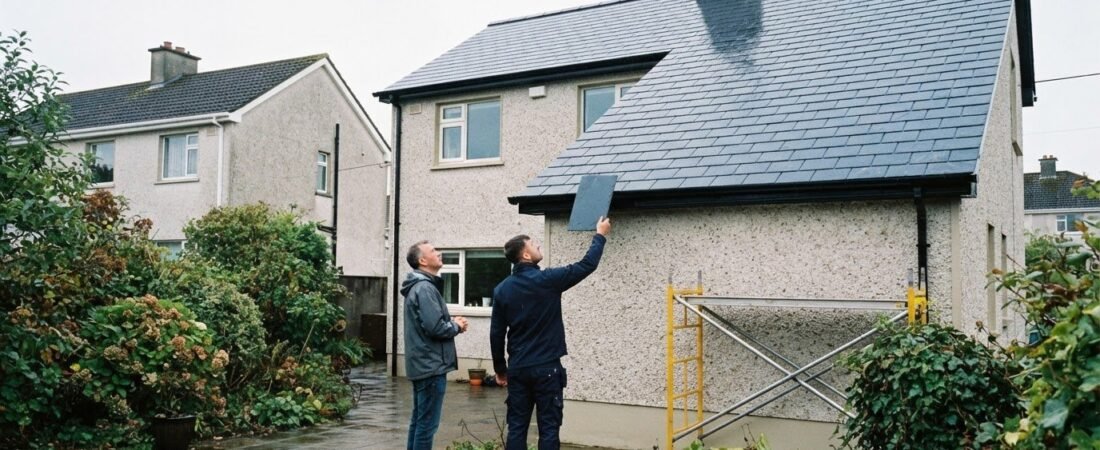
A like-for-like roof replacement, using the same material, pitch and height, is exempt development under the Planning and Development Act 2000. The main rule for planning permission for reroofing in Cork is that changing the roof’s shape or height can mean permission is needed. If permission is granted, it normally lasts 5 years from the date of the decision.
That distinction matters when planning repairs or a full replacement: changing the roof structure is different from renewing the existing covering. A home on the Record of Protected Structures may also need special consideration before work begins.
This guide explains which reroofing changes may need permission, what exemptions can apply and how to arrange a pre-planning meeting with the relevant council. It also covers the application timeline and what the five-year permission period means when organising the work.
Key Takeaways
- Changes to roof shape or height, and work on a protected structure, can affect whether permission is needed.
- A free pre-planning consultation with Cork County Council is available under Section 247, giving you a route to discuss a proposal before applying.
- Rooflights, dormers and solar panels have different exemption conditions, so the details of their position and design matter.
- Allow time for the application process: further information requests can extend the overall wait beyond the council’s decision period.
Do You Need Planning Permission for a New Roof in Cork?
Planning permission for reroofing in Cork depends on the proposed work and the property’s status. If permission is needed, apply to the council responsible for the address and include the required plans and notices.
Planning Application Steps and Decision Timelines
A planning application moves from submission and validation to public consultation and a council decision. A valid application must be decided within 8 weeks, while the public has 5 weeks to make observations.
The newspaper notice starts an important deadline: the application must reach the council within two weeks of its appearance. Requests for further information can extend the overall process to 3 to 6 months. Allow for both the application process and the work that follows. Planning permission for reroofing in Cork should be considered early in your project schedule.
Exempted Development Applications and Decisions
Exempted development is work that can proceed without a planning application if it meets the relevant conditions. Like-for-like roof replacement is generally exempt when the material, pitch and height remain the same.
A proposal that changes the roof or adds features may need a different assessment. This is especially relevant for homes on the Record of Protected Structures, where some roof works need permission. Cork homeowners can discuss a protected property with the relevant council’s Architectural Conservation Officer. Planning permission for reroofing in Cork may depend on both the proposed changes and the home’s status.
Submission Requirements, Documents and Fees
A domestic planning application needs site location maps, layout plans, elevations and sections, along with a newspaper notice and a site notice. These documents show the council the property and the proposed roofing work.
The application must meet the newspaper-notice deadline, and missing documents can affect validation. The domestic planning application fee payable to Cork City Council or Cork County Council is €34. Keep plans and notices consistent, so the application clearly describes the same proposal throughout.
Applying to Cork City or County
Use the planning authority responsible for the property: Cork City Council or Cork County Council. Cork County Council’s Online Submission System covers applications submitted from 3rd September 2025. The council’s planning record lets you follow the application’s progress and decision.
First establish which council handles the address, then prepare the required documents and notices. For flat-roofing work, plans should accurately show the proposed design, giving the authority a clear description of the work being considered.
Book a pre-planning meeting with Cork County Council
A pre-planning consultation lets you discuss a proposed roof alteration with the planning authority before making a formal application. Cork County Council offers these consultations free under Section 247 of the Planning and Development Act. This can help clarify which planning policies apply and what information may help explain your proposal.
Start by identifying whether Cork City Council or Cork County Council is responsible for the property. Then contact that authority about arranging a consultation and clearly describe the proposed roofing changes. Explain whether you plan to retain the existing roofline or alter its shape, height, materials or openings. A clear description keeps the discussion focused on the work proposed.
Before the meeting, gather practical details such as the property address, photographs and a simple description of the existing and proposed roof. These help inform the discussion but do not replace formal application documents. If the building is on the Record of Protected Structures, raise its conservation status during the consultation so the authority can consider how it affects the proposal.
For a property in the county, Cork County Development Plan 2022-2028 provides the relevant county planning context. A proposal may also need consideration against local design or conservation policies, depending on its location and effect. The city and county have separate planning authorities, so the applicable development plan depends on the property’s location. A national designation or protected status can add another planning consideration.
A meeting is a useful place to ask how the authority views the proposal and what concerns it may consider. It is not the planning decision itself; a formal application is still needed when permission applies. If you’re planning roof work, you can discuss the proposed roofing work alongside these planning considerations.

Exempt development examples and size threshold
Exempt development means work can proceed without planning permission when it meets the relevant conditions. In Ireland, replacing a roof like-for-like with the same material, pitch and height is described as exempt under the Planning and Development Act 2000.
The details matter. Minor slate or tile repairs covering less than 30% of the roof area are also described as permitted. A change to the roofline, height or design may fall outside the exemption, so the existing roof and proposed finish need to be considered together. Protected structures can face additional planning controls.
Some exemptions set specific limits for additions. A rear dormer may qualify if it stays within 30 cubic metres, is no wider than 40% of the original roof width, rises no more than 1.2 m above the existing roofline and sits at least 1 m from the eaves. These conditions apply together, not as alternatives. Further information may be needed to assess a proposal against them.
Do building regulations or a fire safety certificate apply to reroofing in Ireland? Planning permission and building regulations are separate matters: a full roof replacement is subject to Building Regulations Part L. An exemption from planning permission does not, by itself, determine whether a fire safety certificate applies to a wider project.
Could reroofing affect a neighbour’s property, a shared roof or a party wall, and what permissions are needed? A proposal affecting a shared roof or a neighbour’s privacy needs careful consideration. Front-facing dormers may require planning permission, especially if they add roof bulk or affect privacy. Planning permission addresses the proposed development, not ownership or access arrangements for shared parts.
Rear extensions have separate exemption conditions, so their floor area and effect on the remaining garden matter. The Planning and Development Regulations 2001 also cover certain attic conversions. For a protected home, its entry on the Record of Protected Structures and advice from the council’s Architectural Conservation Officer are relevant before roofing work proceeds.
Planning permission duration
Planning permission in Cork normally lasts 5 years from the date of the decision. The five-year period starts when the council decides the application, not when you submit it. For a residential reroofing project, use that decision date to plan the construction schedule and keep the approved design in view.
This duration is separate from the time taken to decide an application. Cork City Council or Cork County Council must decide a valid application within 8 weeks, but requests for further information can extend the overall process. Allow for both stages: the application period comes first, followed by the permission period after approval.
The four-week appeal window after a planning decision is a separate part of the timeline. An appeal can affect when the decision is settled, so do not treat the application date or the end of the appeal period as the permission start date. The five-year period runs from the date of the decision.
Use the permission period to organise the work described in the approved application. For example, if the plans show a change to the height or shape of a street-facing home’s roof, keep the construction proposal aligned with those approved details. A different design may not match the permission granted, so clarify proposed changes with the planning authority before proceeding.
Exempted development follows a different route because qualifying work does not require planning permission. That exemption does not create a five-year permission period. The key distinction is whether the roofing work is exempt or covered by a council decision, not simply how soon construction begins.
For a clear schedule, record the decision date, any appeal information and the planned construction dates together. This helps keep the residential project within the permission’s normal five-year duration. Discuss your roof work and project timing before arranging construction.
True Roofing Cork
True Roofing Cork helps homeowners in Cork with roof work once they understand the planning requirements for their property. If the council has approved a proposed change, or the work qualifies as exempt development, the next step is to plan the roofing around the relevant decision and design.
Whether you need repairs, a new roof installation or flat-roof work, the scope depends on the roof’s condition and the agreed project. Guttering services can also help address drainage and maintain the roof’s weather protection. Keeping the work aligned with any approved design helps avoid changes that differ from the application.
For practical help with roofing work at your home, contact True Roofing Cork.
Plan the roof work around the decision
Planning permission for reroofing in Cork is one part of a sound project plan. The next is making sure the roof work matches the approved design or exemption. If your plans change, pause before proceeding and consider whether the revised work affects the planning position.
When you’re ready to discuss the practical work, True Roofing Cork offers New Roof Installations, Roof Repairs and Flat Roofing. The right scope depends on the roof’s condition and the work you intend to carry out. A clear plan connects the roofing work to your property’s needs.
Bring your project details to a discussion about the roof work itself, whether you’re preparing for a replacement or dealing with damage. It’s a straightforward next step as you organise the wider project.
Contact True Roofing Cork to discuss your roofing work and take the next step with confidence.
Frequently Asked Questions
What happens if you skip planning permission?
If the work required permission, carrying it out without approval may lead the council to order it reversed. Applying for retention permission afterwards does not guarantee approval. For example, a completed roof alteration may still be assessed against planning requirements, and the outcome can affect what happens next. Establish the planning position before work starts rather than relying on a later application.
Does reroofing a house in Cork require planning permission?
Not always. Like-for-like replacement can be exempt when the roof keeps the same material, pitch and height. A project that changes the roof’s form or raises its height may need permission. Replacing worn tiles with matching tiles, for example, differs from altering the ridge line. A home’s protected status can also affect the planning position, so consider the property and proposed work together.
What reroofing works are exempt from planning permission in Ireland?
Like-for-like roof replacement using the same material, pitch and height is described as exempt development in Ireland. Minor slate or tile repairs covering less than 30% of the roof area are also described as permitted. These examples do not make every repair exempt: a changed roof profile or added feature may alter the assessment. Keep the work within the existing roof design when relying on a like-for-like exemption.
Do changes to roof materials, colour, shape or height need planning permission in Cork?
A change to roof shape or height can require planning permission in Cork. A different material or colour means the work is no longer a straightforward like-for-like replacement, but that alone does not determine whether permission is required. The full proposal and property context matter. For example, changing tiles while also raising the roofline should be considered as one alteration, not as separate minor choices.
Are there different reroofing rules for protected structures or conservation areas in Cork?
Yes, a home on the Record of Protected Structures can need permission for some roof works. Before planning work on a listed property, request a Section 57 Declaration from the local authority and discuss the proposal with its Architectural Conservation Officer. This helps establish how the building’s protected status affects the work. Conservation area considerations may also be relevant to the property and proposed changes.
How can I check whether a Cork property is a protected structure or in an architectural conservation area?
Contact the planning authority responsible for the address and ask about the Record of Protected Structures and any architectural conservation area designation. Give the property address so the council can identify the relevant location. If the home is listed, ask about a Section 57 Declaration before roofing work. This provides a practical way to clarify the property’s status before settling the final scope of work.